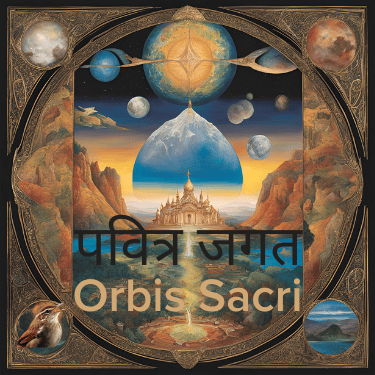
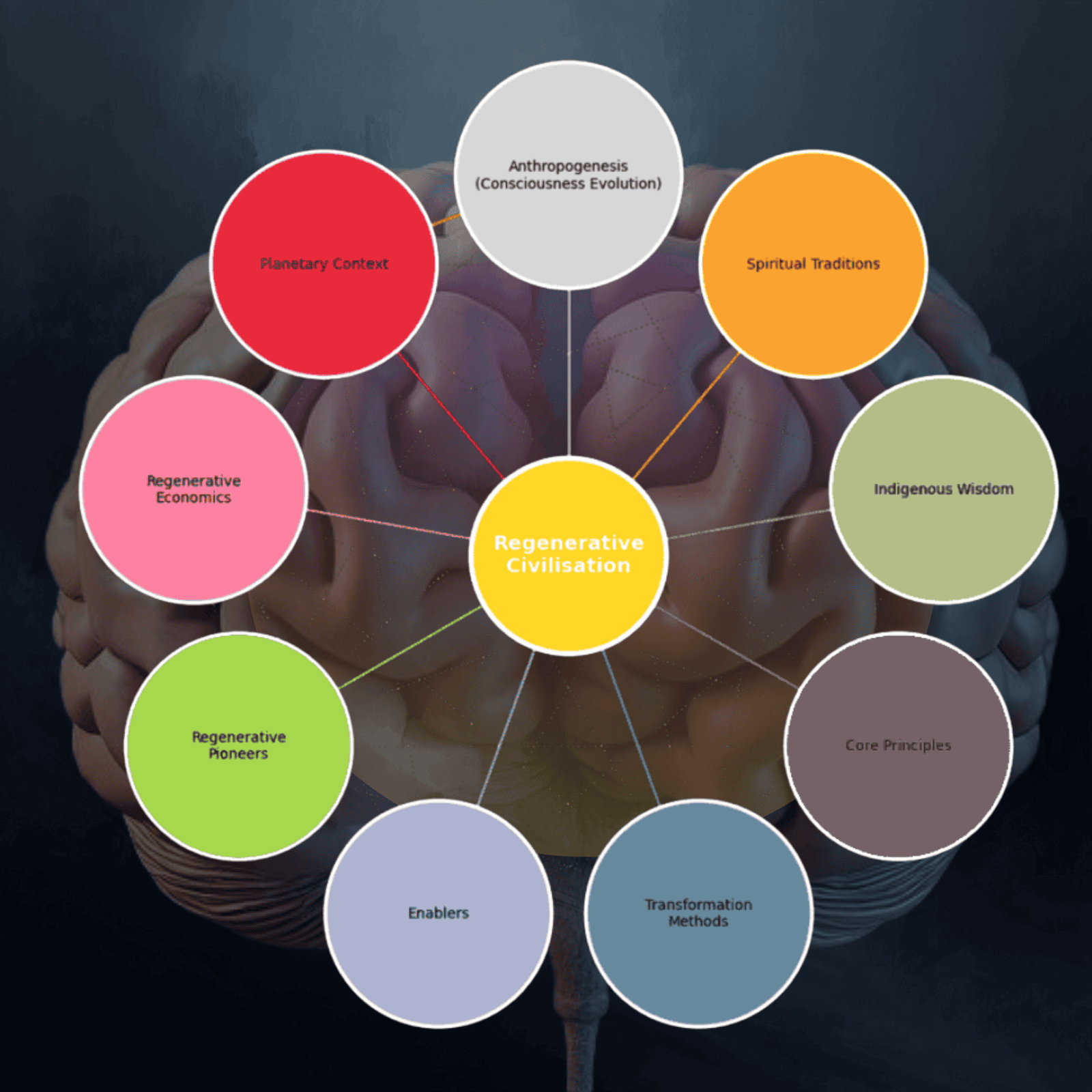
Nine integrated domains working in harmony will get us there
I’m no expert on climate change, economic systems or inequity and poverty. I’m ordinary, unremarkable and retired. My retirement was fairly spontaneous. I’d been an IT industry analyst for a dozen years or so, following decades in the IT industry at IBM, KPMG Consulting, and less well-known companies. I retired in February 2023 as an independent analyst after a ten-day trip to India at the invitation of Zoho Corporation. I wrote about the trip and its impact on me on my blog , Zoho — The Regenerative Company.
It was at a breakfast briefing given by Vijay Sundaram, Zoho’s Chief Strategy Officer, that I first heard the term “regenerative business.” This was my Damascene moment. I felt compelled to explore this domain and turn my back on the latest in business applications and technologies. But I realised that I knew little about the climate change backdrop, and even less about economics. That led me to sign up for an online course at the Stockholm Resilience Centre, quite the eye-opener.
For economics, I read several books to get a broad understanding of current and potential economic systems. And then I realised that wasn’t wide enough.
Almost three years on from that transition from self-employment to researcher and writer, my regenerative horizons have expanded. Having devoured a hundred or so books, multiple research papers, and the expertise offered by over seventy online and offline communities, their various opinions, and specialisms, I’ve reached a point where I think I can offer an original and holistic perspective. My aim is to provide encouragement and hope to those of you who recognise that our world is imperilled, but perhaps struggle to envision a better one. A world where we recognise we are a small part of the complexity of nature. Not its masters, but maybe its guardians. A world of wonder and universal purpose. Where the quality and vitality of relationships are seen as the source of true wealth. Not the zero-sum-game-world of winners and losers. The antithesis of a sociopathic Trumpian world, devoid of compassion and fairness.
I’ve been supported throughout my research journey by the most useful and helpful technology I have ever encountered — my Obsidian Vault. It has enabled me to contain and, vitally, link the 1,684 notes consisting of almost a million words I’ve written, based on over 3,500 documents.
What I have learnt along the way is, to paraphrase R.Buckminster Fuller, in Operating Manual for Spaceship Earth (1969), the planet needs generalists who understand how the whole system works. Not siloed specialists. Indeed, to quote him directly, ‘Specialisation is only a form of slavery wherein the ‘’expert’’ is fooled into accepting his slavery’¹
It’s a perspective with considerable merit. Reductionist thinking about climate change or other broad issues affecting humanity misses the bigger picture and is myopic. The renowned neuroscientist, Dr Iain McGilchrist, explores this through the lens of the brain’s left and right hemispheres in The Master and His Emissary. While the right hemisphere has the ability to understand the bigger picture, sadly, in the West, especially, we have become somewhat enslaved to the left hemisphere at the expense of the right:
‘Following the left hemisphere’s path has already involved the destruction and despoliation of the natural world, and the erosion of established cultures, on a scale which I scarcely need to emphasise; but this has been justified in terms of its utility in bringing about human happiness.’²
Our perspectives are generally out of kilter, and our thoughts and wants are polluted by a veil of lower-order concerns and addictions, encouraged by what societies promote as important but, in truth, rarely matter. We’ve lost the plot. Harmony with each other and nature has been literally blown up.
What will it take to pull back the veil?
My encounter with Zoho made me realise that we don’t have to accept the idea that this is all there is or ‘that’s life’, as if it were immutably fixed. The wild rantings of Trump are nothing but narcissistic lies. ‘Drill-baby-drill’ and the re-emergence of ‘might is right’ or that life is a zero-sum game owned by technocrats richer than Croesus. These are the death throes of a civilisation (if you can call it that) in terminal decline. No wonder the Prime Minister of Canada, Mark Carney’s words of wisdom , talking about the civilisational rupture at Davos this year, resonated so loudly. Right now hard to believe, but yes, the meek shall inherit the Earth. The death of one civilisation will, in time, maybe decades from now, give birth to a new one, a regenerative civilisation where fairness and universal harmony enable people, however humble their circumstances, awaken to a unifying purpose that brings true joy to our lives and the sacred Earth we inhabit.Guardians of creation, not faux-masters. And this brings me on to the critical domains outlined in the image at the top of this article.
1. Anthropogenesis — the Evolution of Humanity’s Consciousness
Early in my research, I wondered why, despite all the scientific evidence, little progress had been made in reversing the extractive, man-made destruction of our planet. To be fair, apart from enlightening documentaries like Sir David Attenborough’s Blue Planet I and II, we only hear about terrible weather on our TVs with climate change, as a throwaway causal term. Activist organisations such as Stop Oil are perceived as irritants, blocking commuter traffic or daubing paint on museum treasures. It seems climate change, its causes and development, has been infantilised. The push to Net Zero is seen as an exercise in blind faith and a threat to economic growth. Yet the logic of infinite growth is that we would need more resources than the Earth contains to deliver it.
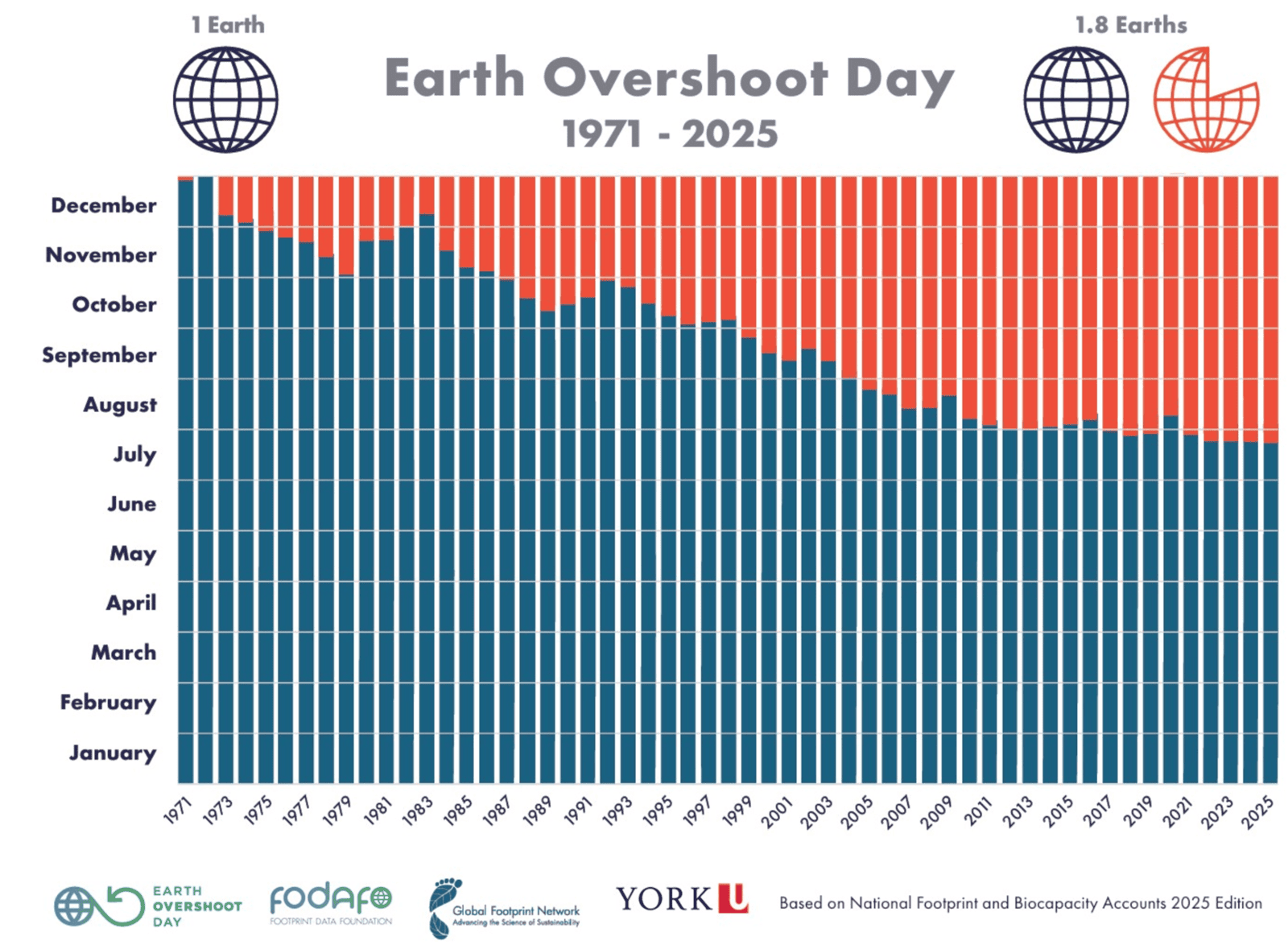
Last year, Earth Overshoot Day for global commerce fell on July 24th. It gets earlier every year, as the pace of consumption accelerates faster than the Earth can regenerate and recover.
Like inequality, poverty and injustice, it’s someone else’s problem. Out of sight, out of mind. Meanwhile, we keep wishing the problems away but rarely think about them. Awareness is insufficient. If we are to evolve as a species, it requires a massive shift in consciousness and a hunger for a different world.
The Stockholm Resilience Centre course introduced me to the Anthropocene era, which recognises the impact of our extractive and consumptive industries and societies. The imbalance between humanity’s insatiable need for stuff and diminishing planetary resources is laying waste to our world. Or, as Pope Francis wrote in the encyclical: Laudato Si (2015): ‘’We’re building hell on Earth — whereas our job is to prepare the world for God’s earthly Kingdom.’’
Irrespective of our religious or non-religious disposition, that’s a statement that is hard to argue with.
The term Anthropocene triggered a distant memory. In the mid-70s, I read Pierre Teilhard de Chardin’s 1955 book, The Phenomenon of Man, which was incorrectly translated from the original French, Le phénomène humain. In brief, this Jesuit priest and palaeontologist saw human evolution as a process that began with the Big Bang, as the universe moved towards ever greater complexity, from the sub-atomic and molecular to simple life forms, from low levels of consciousness to self-awareness, and to ever higher levels of consciousness. From cosmogenesis, the formation of matter, stars, planets and the fabric of the universe, biogenesis, the evolution of life on Earth in all its forms, and anthropogenesis, reflective self-awareness and ultimately the Omega point of unity with God, or Christ consciousness. A process that may take many tens of billions of years.
As Teilhard de Chardin wrote: “The day will come when, after harnessing space, the winds, the tides, and gravitation, we shall harness for God the energies of love. And on that day, for the second time in the history of the world, we shall have discovered fire.” I like his vision, and the idea of anthropogenesis appeals to me as a longitudinal context for human development. It’s where true wealth, equality and justice are measured not in money, or ‘stuff’, but in the quality, breadth and depth of our relationships. With each other and all lifeforms. As TdC said, fuelled by the energies of love. However, it might never happen if we destroy ourselves. This brings me to our current context, the here and near-term present, and, travelling down the left side of the diagram, the second domain. The Planetary Context.
2. Planetary Context — where we are now and critical risks
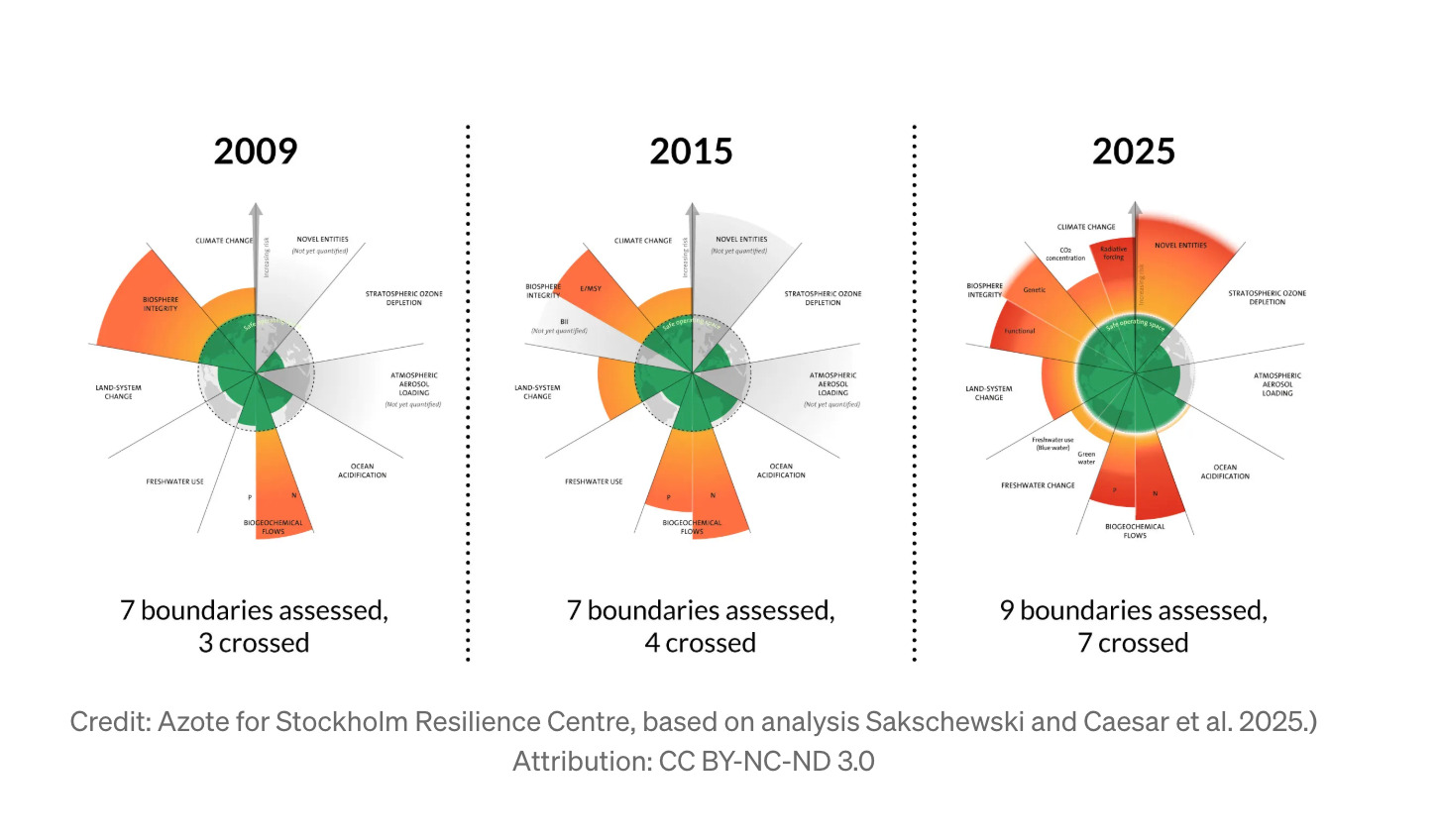
This domain is a very real concern within our own lifetimes and for our children, grandchildren and beyond. First, we must recognise the challenge of reversing the conditions and learn to live within the nine planetary boundaries and the interconnected processes that maintain Earth’s resilience.
At the household level, most of us will feel we cannot make an impact. Nevertheless, we can find ways to contribute, in small ways, perhaps within our communities, or in our gardens, or by buying products that have a positive impact. I believe it starts by reflecting on our existing perspectives and questioning them, and by reading about inspirational examples at the local level, like the Handmade Bakery in Slaithwaite, or local community examples like the Transition Network, which started small and has evolved internationally, supported by ordinary people getting involved in their own communities.
3. Regenerative Economics — must supersede our current extractive economic system.
Continuing our journey anti-clockwise, we come to the regenerative economics domain. Our existing economic system is the major cause of the Anthropocene damage. It’s built on the mad idea that we can grow our economies forever, despite the Earth’s resource limitations. Kate Raworth, in Doughnut Economics (2017), updated several times, provided a brilliantly intuitive doughnut diagram illustrating the impact of economics and the safe space within which it must operate to avoid further damage to the planet. It directly echoes the Stockholm Resilience Centre diagram above.
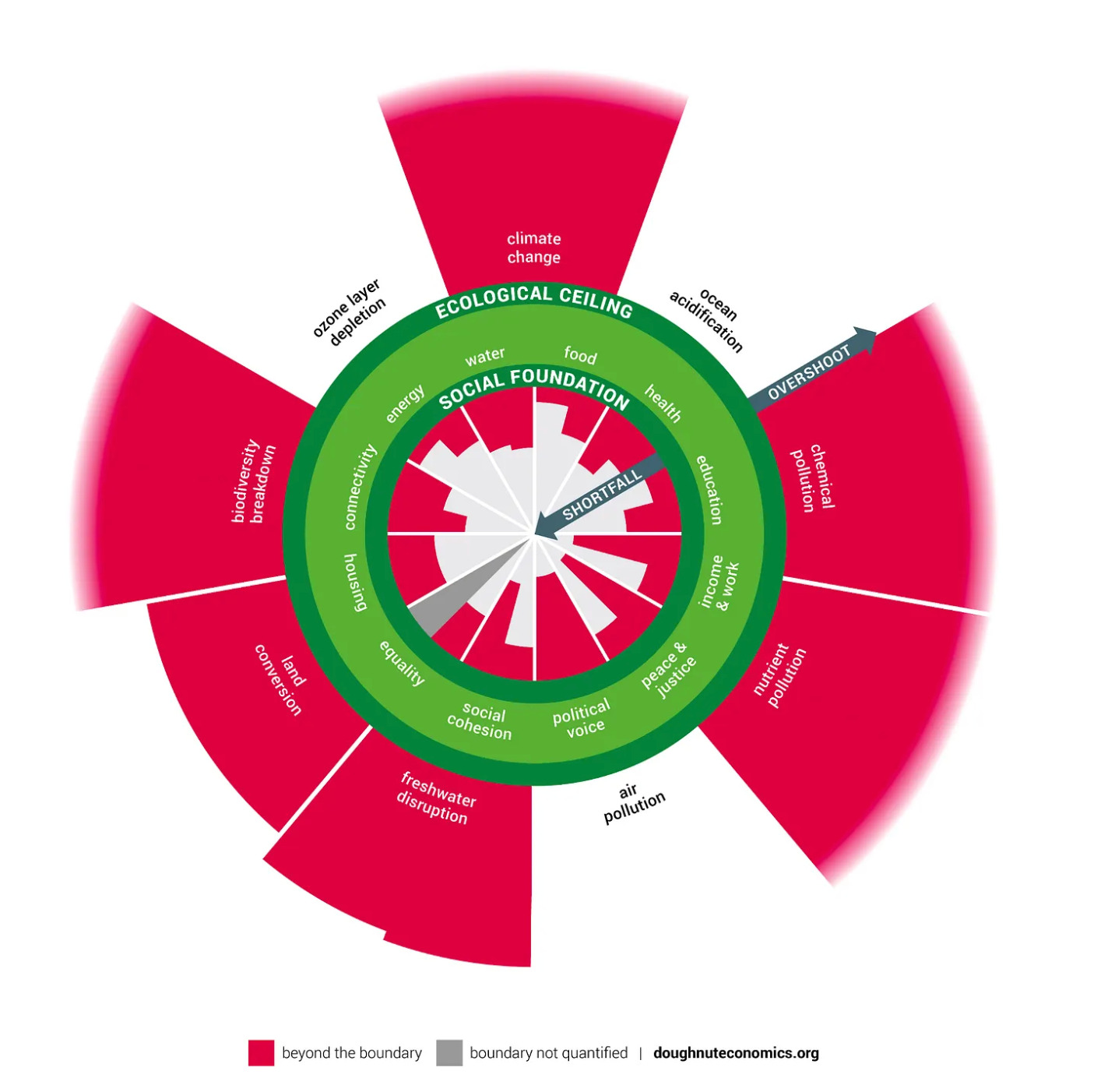
Among the handful of books I’ve read on how economics must change to shift from the extractive that does not account for negative impacts on people or planet, John Fullerton’s latest, on Regenerative Economics: Revolutionary Thinking for a World in Crisis³, is also worth a read. As a former JP Morgan employee, he has a deep understanding of how modern finance works — warts and all.
Domains two and three lay out the main ‘polycrisis’ challenge and raise the imperative flag to change. However, to my mind, to avoid despair, we need encouragement. That’s where the fourth, Regenerative Pioneers step in.
4. Regenerative Pioneers demonstrate the art of the regenerative possible.
I’ve written about a few pioneers. At a local level, the Handmade Bakery and the Transition Network. At a larger international scale, two in particular have inspired me. I’ve already cited Zoho, but it is another Indian company that epitomises the soul of a regenerative business: Jaipur Rugs.
Two standout characteristics are uppermost in my mind. The first is how the company has brought work to impoverished rural communities and a route to market for their hand-woven rugs. The second is that the company doesn’t have an HR department, but a department named the ‘Search for Divine Souls’.NK Chaudary, the company’s founder explained why: ‘Everybody has a compass in himself given by God. The voice comes from inside, telling me I am on the right path. To run my business successfully, I need people with similar philosophies. If we love what we do and love people, the rest will look after itself.’ He is definitely up there on the high-level of consciousness scale. Beyond being Indian and inspired by Hindu religious beliefs, both Jaipur Rugs and Zoho are helping rural communities thrive, in contrast to the relentless urbanisation and the loss of young people that lead to village decay.
5. Regenerative Enablers come in various forms
The growing demand for nutritious food, healthy ecosystems, and jobs in our rural communities is becoming more evident as regenerative farming and rewilding grow. I’ve yet to write about Knepp Farm, but this family-owned farm of 3,500 acres near Knepp Castle in West Sussex is a phenomenal rewilding example. The owners, Sir Charles Burrell and Isabella Tree, have been at it since 2001. Turning a once-intensive arable and dairy farm, whose soil was all but dead, into a haven for wildlife, rare species, including the first UK-reared white storks in 600 years, and nutritious food, including their own venison, which can be bought online. There is so much more to their story than this, but Knepp Farm is a true inspiration for regenerative agriculture and rewilding.
Regenerative energy is another area I have examined. While we are all familiar with wind farms, what interested me was the potential to harness energy from the ocean and rivers, particularly tidal stream and wave energy. The potential once the supporting technologies (enablers) reach scale and parity with wind on costs (early 2030’s) could provide around 20% of the UK’s need. I wrote a series of five articles under the main heading: Gifts from God to Help Humanity Clean up Its Mess, introducing a dozen tidal stream and wave energy pioneers.
Regenerative education is another form of enabler, but still in its infancy. Most education, according to Dr Iain McGilchrist, fosters left-hemisphere thinking and over-specialisation, at the expense of broad, flexible, intuitive and relational thinking. Systems thinking offers hope that we will become better at seeing the broader relationships and linkages across ecosystems. Seeing the whole and being able to imagine and develop harmonious solutions with regenerative outputs would help bring the left and right hemispheres back into balance.
Back to the article image. I’m now going to travel clockwise on the right of the diagram. The right could be seen as more right-hemisphere-dominant, as it exhibits right-brained thinking. This brings me to Spiritual Traditions.
6. Spiritual Traditions can be a valuable source of inspiration and moral courage
We are so used to seeking the latest information that many of us have lost the wisdom that may come from whatever religion we follow. Atheists and agnostics may also be tempted to ignore what spiritual traditions can offer, regarding stewardship of planetary life, soil and seas, and the resources our planet provides. Wisdom is a concept that rarely surfaces in discussions or the news we consume. Yet, as I have learned, most religious traditions have something valuable to say about humanity’s role in safeguarding the vitality of the natural world. I’ll write more about the specifics in subsequent articles.
7. Indigenous Wisdom can teach us a lot about safeguarding our world.
Tribal wisdom from around the world, developed over many thousands of years, can teach us much. We ought to seek and harness this ancient wisdom. Ecological scientists should have the humility to study this wisdom and deepen their understanding of how biosystems work and how best to support them.
Give a voice to the indigenous peoples around the world and give us ears to hear.
While Indigenous people have been recognised by the UN and invited to participate since COP29, according to Oxfam, Indigenous tribes protect up to 80% of the Earth’s biodiversity, yet they only represented 0.4% of the 50,000 COP29 delegates. Not only must their representation be significantly increased, but their authority over eventual COP decisions should carry considerably more weight than fossil fuel lobbyists. COP 30, held in Brazil, significantly increased its influence. Especially regarding territorial rights, and with strong backing from Brazil’s president as host. A major outcome was the Intergovernmental Land Tenure Commitment (ILTC) which pledged to recognise land rights over an area the size of Iran — in Brazil, Colombia, and the Democratic Republic of Congo, by 2030. Definitely progress, but still dwarfed by oil-rich nations and interests. I believe significant reform must be undertaken at the UN, most notably by removing the permanent member seats and veto rights of China, France, Russia, the UK and the USA. We need the wisdom of the Elders, not the self-interest of permanent members.
8. Core Principles will provide a foundation for wise actions in all regenerative activities.
As we examine successful practices, certain foundational principles will help guide us. I believe that if we view all life, Earth’s resources, and supporting ecosystems as sacred, that is a good start. A healthy, non-extractive mindset. A unitive appreciation, recognising we share a common home and that life-sustaining systems must be respected and understood. That understanding comes more from the right hemisphere of our brains, which is better at perceiving connections and how multiple systems in nature work. I think this goes beyond systems thinking, although that is a good start. It’s more about web-systems thinking.
9. What Transformation Methods might we adopt to reimagine and create a regenerative civilisation?
I believe there is an inexorable pull, a magnetism that can help us transform. This echoes Teilhard de Chardin’s anthropogenesis dynamic. This is exactly what happens within Theory U developed by Otto Scharmer. I joined one of MIT’s online courses a couple of summers ago. The group exercises tapped into our subconscious, right-brained insights to co-create a prototype of the future:
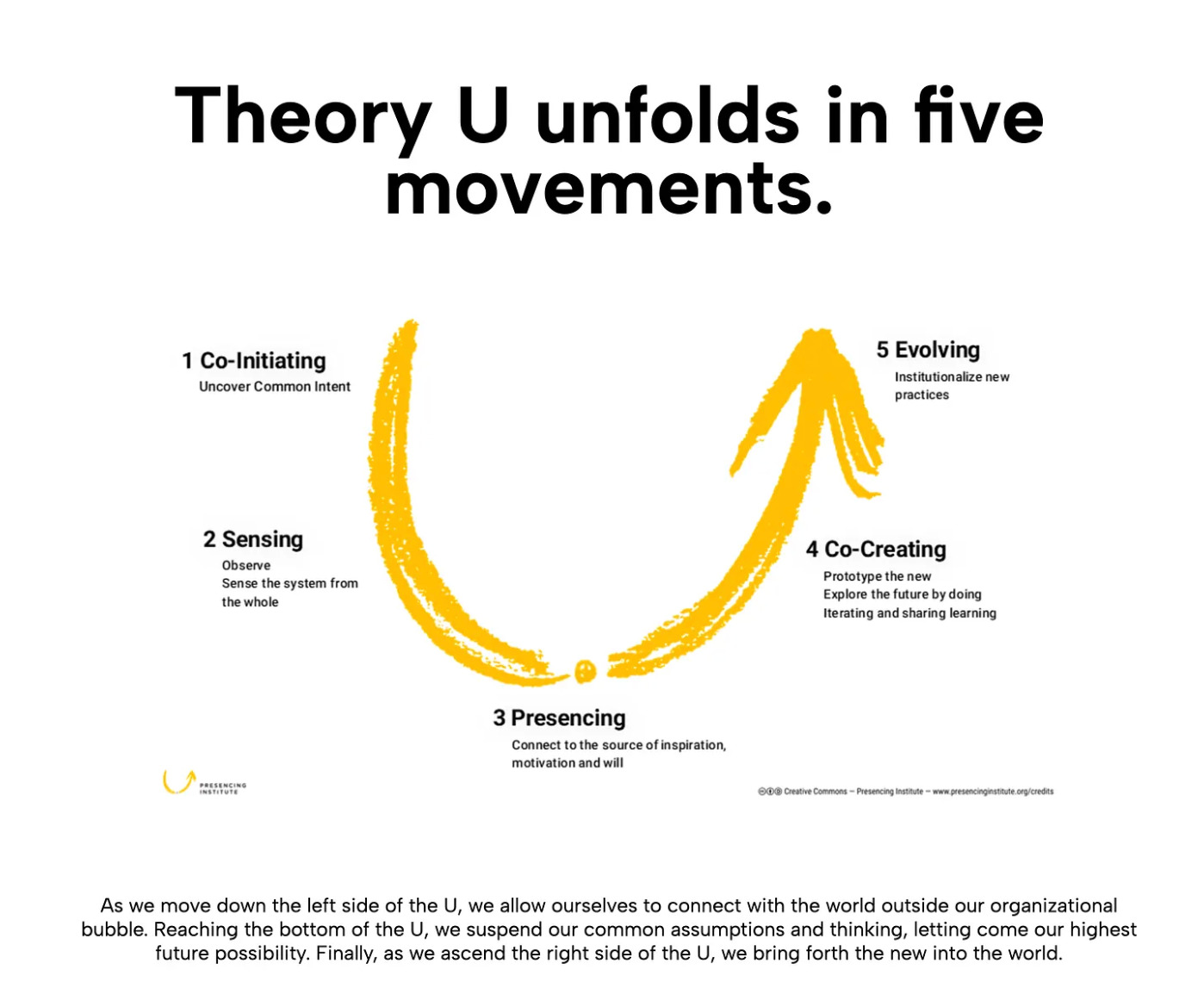
A range of other transformation methods is suitable for different scales of transformation, and, of course, we can learn from nature, whose regenerative principles have existed since the beginning of life.
From overview to detail
These nine domains provide a starting point for a wide-ranging discussion. On what it takes to move to our next evolutionary stage: developing a regenerative civilisation that makes life worthwhile, purposeful, and fair for all. One that truly values genuine guardianship of all life and Earth’s resources. This might not be Heaven on Earth, but it wouldn’t be too far off. No doubt I shall be pushing up daisies long before this is achieved, but I am confident that others far better equipped than me will move this forward. If this generates a debate, I’ll be happy.
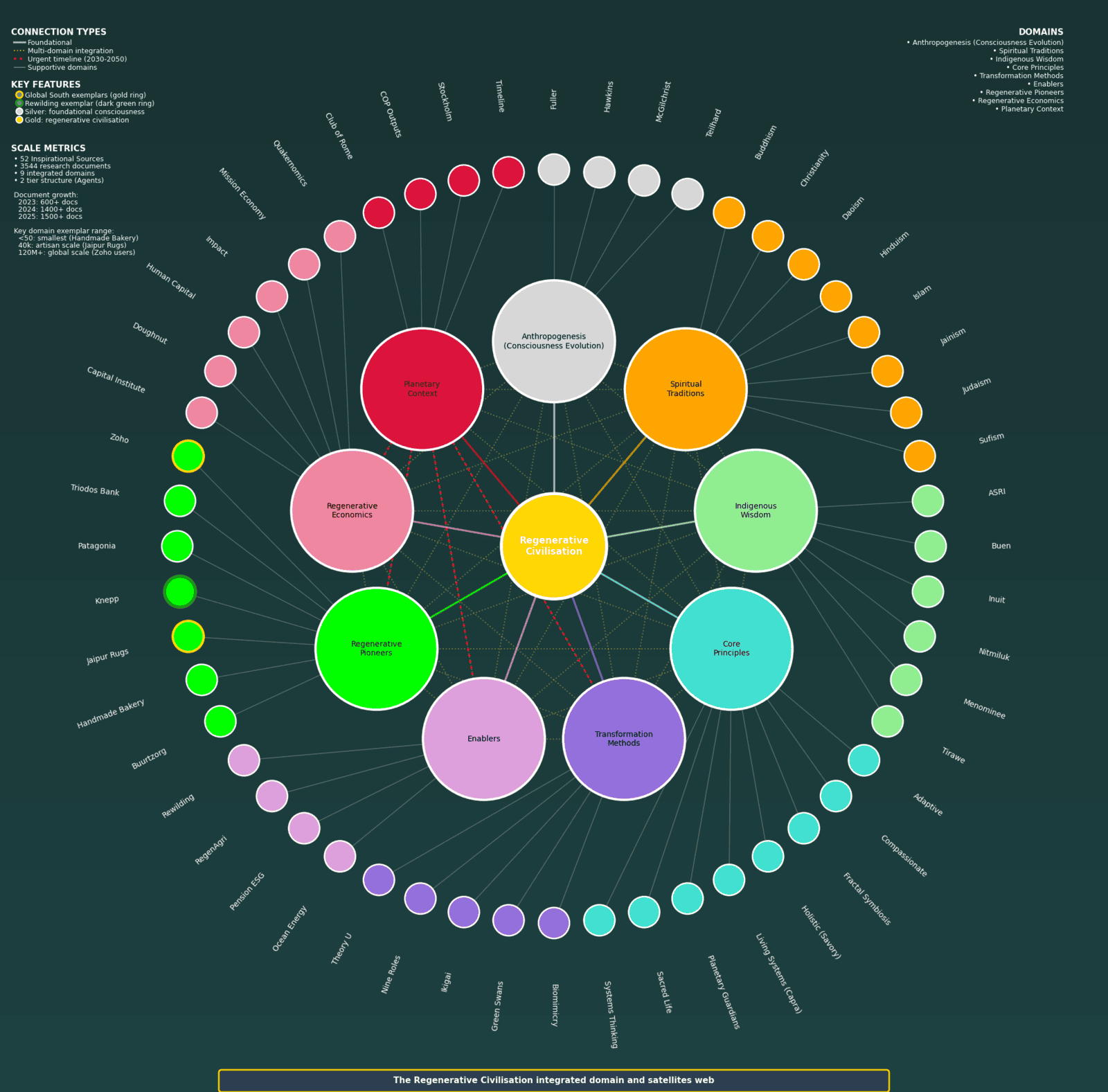
In the meantime, I leave this expanded mandala, which illustrates the 52 inspiring sources that have led me here. So many connections across domains, but the most fundamental is our level of consciousness.
Footnotes:
- Fuller, Buckminster. Operating Manual for Spaceship Earth (p 59). The Estate of R. Buckminster Fuller. Kindle Edition.
2. McGilchrist, Iain. The Master and His Emissary: The Divided Brain and the Making of the Western World (p. 434). (Function). Kindle
3. Edition.https://capitalinstitute.org/regenerative-economics-book/